
Did you know that Empathy Lab has curated a ‘Read for Empathy’ book list each year since 2017? Each title is carefully selected by a panel of experts in order to help facilitate imparting empathy-building conversations with young people. You can find details of this year’s collection (and a link to previous lists) HERE.
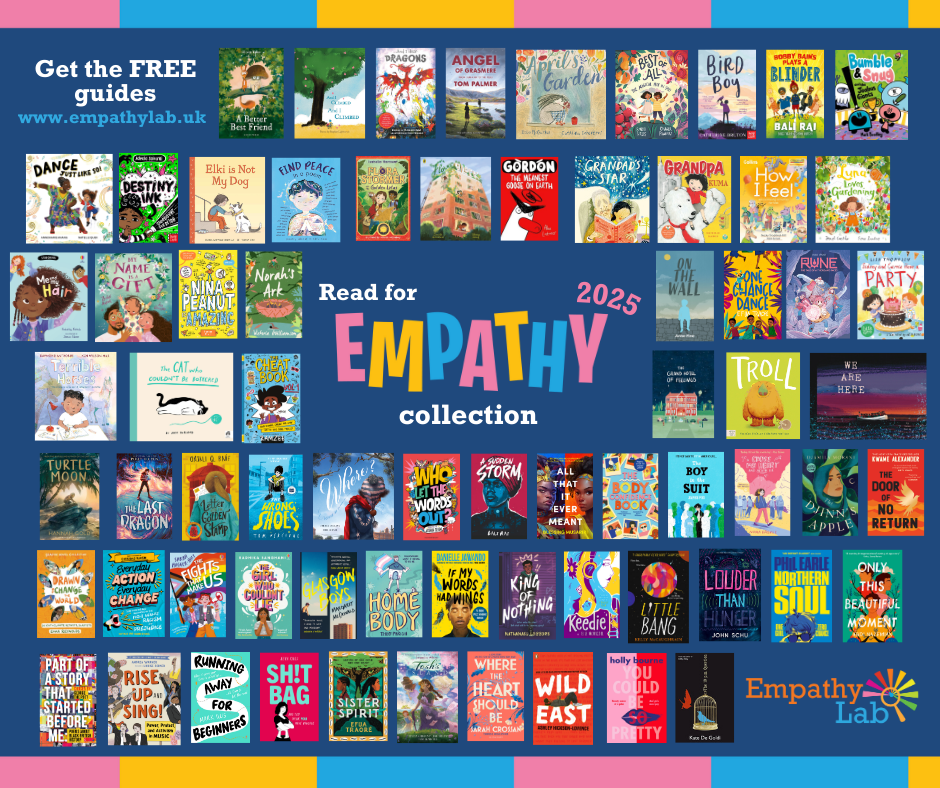
The collection features, picture books, early chapter books, and longer novels. I get to showcase a fantastic first chapter book which is accessible to readers aged 5+ but which I will be using with the Key Stage 2 group I work with at a specialist provision.
Introducing:

“There are plenty of mean geese in the world. They hiss and honk and chase you down for a handful of crumbs. But Gordon is the meanest of them all. He stomps on sandcastles, knocks ice-creams out of hands, and punches sharks – he’s the worst, and he loves it.
Until one day, something extraordinary happens . . . Anthony the Piglet gives him a flower. With this one act of kindness, Gordon’s world begins to crumble.”
The theme of this year’s collection is ‘Jump Into Someone Else’s Story.’
What I love about ‘Gordon the Meanest Goose on Earth’ is that to start with, readers get sucked into the raucous behaviour of Gordon and his acquaintances at the Meanest Goose Society, where there are laughs aplenty. Whether it’s swapping eggs for golf balls or pressing the cross-the-road button 100 times on a row, they’re always up to something.
It’s only when a random act of kindness gives Gordon cause to stop and think, that readers are invited to do the same.

‘No one has ever given him anything nice before. Not ever.’ Ask children to stop share a time where someone has given them or done something nice. How did it feel? Imagine if that had never happened to you. How might that have made you feel? How might it have made Gordon feel?
The mean goose are all very confused as to why Anthony gave Gordon the flower after Gordon was so unkind to him. What does it mean? Why would he do that?
There are so many opportunities here for children to learn about shield behaviours and how to look for the real emotion behind them (I’m scared, what if people don’t like me? What if I’m not good enough? People always expect the worst of me….) Plenty of learning there for adults too! We need to dig behind the behaviour we’re faced with to work out the function.
Towards the end of the story, Gordon tries to naturally repair his relationship with Anthony, then goes on to try and make things right with all the other creatures he’s upset recently. It would be interesting to explore with children when they’ve tried to ‘make things right’ with someone and how this has felt.
As well as encouraging children to reflect on the motives behind the behaviours of others, we have also used this with individual children to shine a light on their own ‘shield’ behaviours and what they may actually be masking. This has had a powerful impact on the children’s own understanding of themselves and given us a common point of reference to explore the concept further.
I hope that’s inspired you to sign-up your setting for access to the special resources and events available for Empathy Day Festival this June.
Jo.
*Many thanks to the wonderful people at Empathy Lab for inviting me to be a part of this blog tour*
 Library Girl and Book Boy